Flooding in Dog Training: What’s Really Happening (And Why It Matters)
 Linda Kwoun
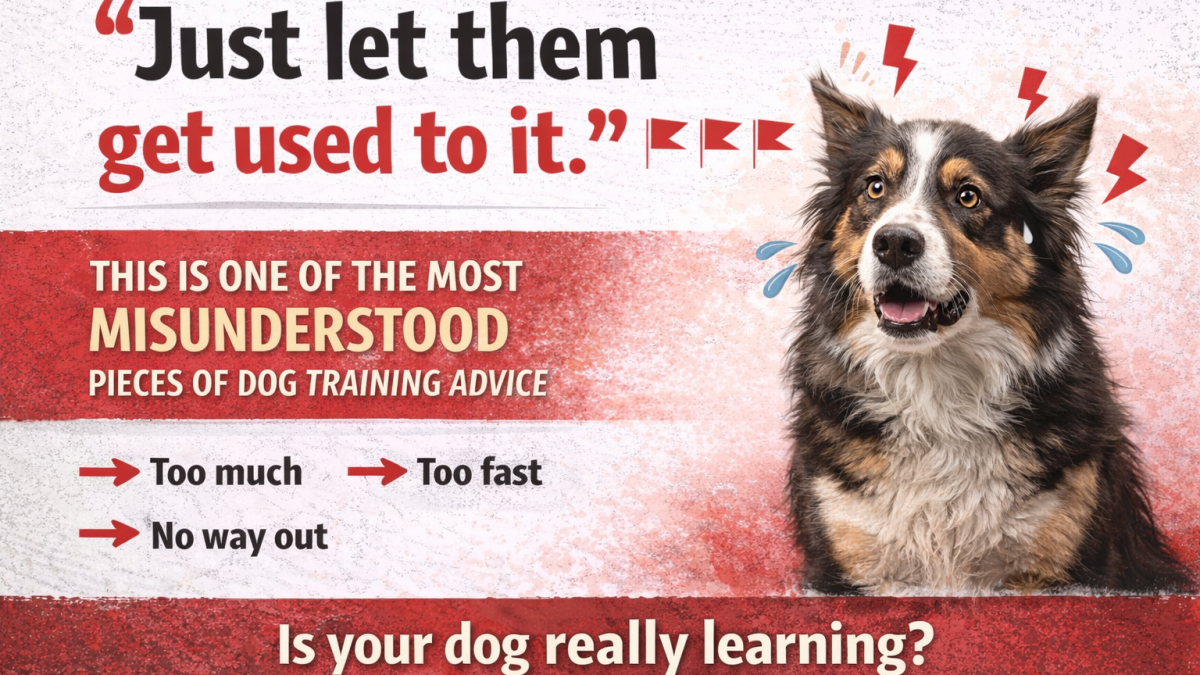
When we shift from forcing them through hard moments…to guiding them through manageable ones, everything changes.
In dog training, there’s a method that often gets misunderstood—or worse, recommended as a shortcut.
It’s called flooding.
And while it might look like a dog is “getting used to it,” what’s actually happening beneath the surface tells a very different story.
Let’s break it down.
What Is Flooding?
Flooding is a behavior modification technique where a dog is exposed to a fear-triggering stimulus at full intensity, without the ability to escape or create distance.
In simple terms:
Your dog is overwhelmed… and stuck in it.
Examples:
- A dog who is scared of other dogs is brought into a busy park and kept there
- A barking/lunging dog is forced to “sit and stay” while triggers pass closely
- A fearful dog is repeatedly exposed to strangers approaching without space
The idea behind flooding is that the dog will eventually “get over it.”
But that’s not what’s actually happening.
What Your Dog Is Experiencing (Biologically)
When a dog is flooded, their nervous system goes into survival mode.
This is not learning mode.
This is “I need to survive this” mode.
Here’s what’s happening inside their body:
1. Activation of the Stress Response
Your dog’s body shifts into fight, flight, or freeze.
- Heart rate increases
- Breathing becomes shallow or rapid
- Muscles tense
- Stress hormones like cortisol and adrenaline surge
This is the same system that activates in real danger.
2. The Thinking Brain Goes Offline
The part of the brain responsible for learning and decision-making takes a back seat.
Instead, the emotional brain takes over.
This means:
- Your dog is not learning new skills
- Your dog is not processing calmly
- Your dog is reacting, not choosing
3. Learned Helplessness Can Set In
If your dog cannot escape and nothing they do changes the situation, they may shut down.
This can look like:
- Stillness
- Lack of reaction
- “Calm” behavior
But this is not calm.
This is learned helplessness—a state where the dog has given up trying.
What You Might See (As the Observer)
This is where things get tricky.
Flooding can look like it’s working.
You might see:
Early Signs:
- Barking, lunging, whining
- Hyper-vigilance
- Inability to take food
Mid-Stage:
- Slower reactions
- Hesitation
Later Stage:
- Quiet
- Still
- “Tolerant”
And this is where many people think:
👉 “It worked!”
But what you’re often seeing is not comfort.
It’s overwhelm… or shutdown.
The Risk: What Flooding Teaches Instead
Instead of building confidence, flooding can:
- Increase fear over time
- Create stronger negative associations
- Lead to unpredictable reactions later
- Damage trust between dog and human
Your dog doesn’t learn:
👉 “I’m safe.”
They learn:
👉 “I can’t escape.”
Applying This to Reactive Dogs
Let’s look at a common real-life scenario:
A dog who barks and lunges at other dogs on walks.
A common approach:
- Stand your ground
- Keep your dog in position
- Let other dogs pass closely
- Wait for them to “get used to it”
From the outside, it might look like progress:
- The barking stops
- The dog stays still
- The reaction appears smaller
But internally?
That dog may be:
- Holding tension
- Suppressing behavior
- Becoming more stressed with each exposure
And over time…
That pressure can build—and eventually explode.
What to Do Instead
If flooding is overwhelming your dog…
The alternative is gradual exposure with support.
And this is where real transformation happens.
During training, we don’t throw your dog into the deep end and hope they figure it out.
We use short, incremental exposure sessions.
We toe the edge—that place where your dog notices the trigger, but can still think, process, and respond.
Because that’s where learning lives.
Not in overwhelm.
Not in shutdown.
But right at that edge.
Training at Your Dog’s Pace
Every dog has a different threshold.
Our job isn’t to push past it.
Our job is to respect it—and gently expand it over time.
That means:
- Working at a distance your dog can handle
- Adjusting in real time based on what we observe
- Progressing only when your dog is ready
We’re not rushing the process.
We’re building it.
The Real Goal (This Is the Part Most People Miss)
The goal isn’t just to “get through” the moment.
The goal is to help your dog learn how to:
- Regulate their emotions
- Disengage from the trigger
- Move away when needed
Not because we forced them…
But because they’ve learned it works.
What This Looks Like in Real Life
Instead of:
👉 Holding your dog in place while another dog passes
We might:
👉 Create distance
👉 Let your dog observe
👉 Reinforce a check-in
👉 Move away before things escalate
That’s not avoidance.
That’s skill-building.
Why This Works
When dogs are given:
- The right level of challenge
- The ability to think
- The option to choose
They don’t just cope.
They learn.
And over time, that’s what creates:
- Calm responses
- Better decisions
- Real confidence
The Bottom Line
Flooding doesn’t teach your dog to feel safe.
It teaches them to endure.
And those are not the same thing.
Real behavior change—the kind that lasts—comes from:
- Feeling safe
- Having choice
- Building confidence step by step
A Thought to Leave You With
Your dog isn’t trying to be difficult.
They’re trying to cope.
And when we shift from forcing them through hard moments…
to guiding them through manageable ones…
Everything changes.
❤️❤️❤️
If your dog struggles with barking or reacting on walks, you don’t have to figure it out alone.
I help dog owners understand what’s actually happening beneath the behavior—and give you a clear plan so you know exactly what to do in those moments.
📞 Call or text me at 949-736-4765 to talk through what’s going on with your dog.
Or explore my programs to start building calmer, more confident walks—together.