How Giving Your Dog Choice Builds Confidence (Especially for Reactive or Shy Dogs)
 Linda Kwoun
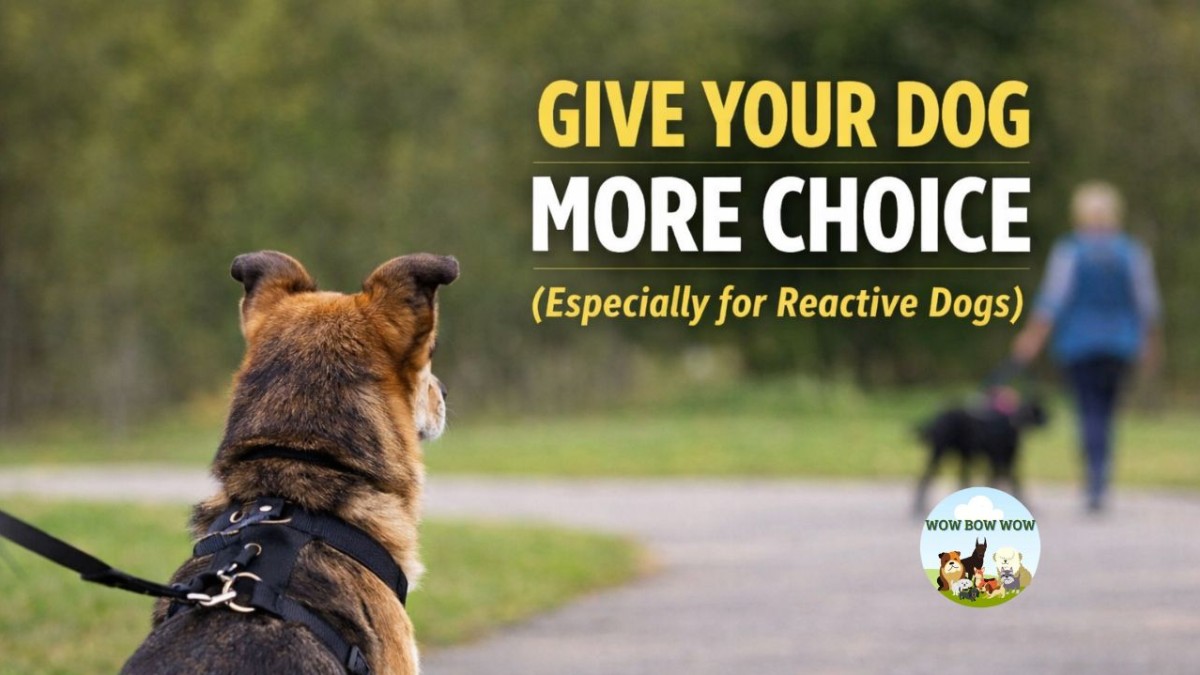
Giving your dog choice builds confidence and reduces reactivity. Learn how agency helps shy or reactive dogs feel safer and more focused.
How Giving Your Dog Choice Builds Confidence (Especially for Reactive or Shy Dogs)
If you have a reactive, shy, or unsure dog, you may be working hard to manage barking, lunging, freezing, or avoidance.
You may have been told:
“Just make them do it.”
“They need to get used to it.”
“Don’t let them avoid things.”
But here’s the truth:
Confidence doesn’t grow from control alone.
It grows from agency.
And especially for reactive dogs, giving appropriate choice is one of the most powerful confidence-building tools we have.
What Does It Mean to Give Your Dog Choice?
Giving your dog choice means allowing them appropriate control within structure — such as choosing to disengage from a trigger, approach at their own pace, or opt out of overwhelming situations.
It does not mean letting your dog run the house.
It means creating a balance between:
-
Leadership
-
Safety
-
Boundaries
-
And agency
When dogs feel they have some influence over what happens to them, their nervous system settles. And learning becomes possible.
Why Choice Matters So Much for Reactive or Shy Dogs
Reactive dog behavior often stems from uncertainty, fear, or feeling trapped.
When a dog feels cornered or forced, the nervous system shifts into protection mode:
Fight.
Flight.
Freeze.
Barking, lunging, growling, or shutting down are often attempts to create space or regain control.
When we remove all choice, we increase pressure.
When we add appropriate choice, we reduce pressure.
Lower pressure = lower reactivity.
Lower reactivity = more learning.
More learning = growing confidence.
The Reality: We Control Our Dogs’ Entire World
Our companion dogs live in a human-designed environment.
We choose:
-
Where they sleep
-
When they eat
-
Who comes into the house
-
Whether they’re on leash
-
Whether they’re behind a gate
-
Whether they go to a busy park
-
When they interact
-
When they don’t
We control their fences.
Their doors.
Their access to us.
And structure is necessary. Safety matters.
But especially for shy or reactive dogs, if control is constant and choice is absent, we can unintentionally create helplessness.
Helplessness often shows up as:
-
Escalating reactivity
-
Increased sensitivity
-
Shutdown behavior
-
Hypervigilance
-
Avoidance
How Giving Choice Builds Dog Confidence
Confidence isn’t built through flooding.
It isn’t built through overpowering.
It isn’t built by forcing exposure.
Confidence grows when a dog experiences:
“I can move away.”
“I can look back at my person.”
“I can pause.”
“I can make a good decision.”
“And my human notices.”
When dogs learn their choices matter, they begin offering better ones.
Practical Ways to Give Your Dog Agency (Within Structure)
This is where people sometimes worry:
“But my dog still has to listen.”
Yes. Leadership still exists. Boundaries still exist.
But inside those boundaries, we can build partnership.
Here’s what that looks like in real life:
1. Let Your Dog Choose Distance
If your dog notices another dog in the distance, instead of pulling them closer or insisting they “face it,” allow them to:
-
Pause
-
Observe
-
Look away
-
Look back at you
Reinforce the choice to disengage.
That moment of looking back at you? That’s confidence forming.
2. Allow Approach and Retreat
If your dog is unsure about a new person:
Don’t hold them in place.
Don’t insist on interaction.
Let them approach.
Let them retreat.
Let them re-approach.
When a dog learns they can leave safely, they are more likely to engage voluntarily.
3. Offer Safe Spaces
For noise-sensitive or easily overwhelmed dogs, a safe place (bedroom, crate, mat behind a gate) is not “avoidance.”
It’s regulation.
Sometimes the most empowering thing you can give a reactive dog is the ability to opt out.
4. Reinforce Thoughtful Decisions
When your dog:
-
Looks at a trigger and then back at you
-
Chooses to sniff instead of bark
-
Hesitates and then relaxes
Mark and reinforce.
You are shaping decision-making, not just obedience.
5. Build Choice Into Training
Instead of micromanaging every behavior, occasionally offer options:
“Sit” or “down.”
Engage with you and earn reinforcement.
When dogs feel like participants instead of passengers, motivation increases.
But What About Control?
There are moments when safety overrides choice.
If your dog is about to run into the street, we are not negotiating.
If they are rehearsing dangerous behavior, we intervene.
But outside of true safety issues, we can choose partnership over pressure.
And long-term?
Dogs who feel safe making choices are often the ones who cooperate more reliably.
Because they want to.
Signs Your Dog’s Confidence Is Growing
When you start incorporating agency into your reactive dog training, you may notice:
-
Faster recovery after triggers
-
Softer body language
-
More voluntary check-ins
-
Less escalation
-
Curiosity replacing tension
-
Improved resilience
These quiet changes are confidence in progress.
Leadership + Agency = Real Confidence
Positive reinforcement training is not permissive.
Your dog does not need democracy.
They need:
-
Clarity
-
Structure
-
Consistency
-
Boundaries
But especially for shy or reactive dogs, they also need:
Moments of control.
Moments of opting out.
Moments of choosing correctly and being reinforced for it.
We control their world.
The question is whether that world feels safe inside the structure we create.
When you give your dog appropriate choice, you are not losing authority.
You are building trust.
And trust is what transforms reactivity into resilience.
If you’re working with a reactive, shy, or unsure dog and you’re not sure how to balance structure with agency, that’s exactly what we focus on inside my programs.
Because confidence doesn’t come from force.
It comes from partnership. 🐾